
November 27-2025
By: Dhania Puspa
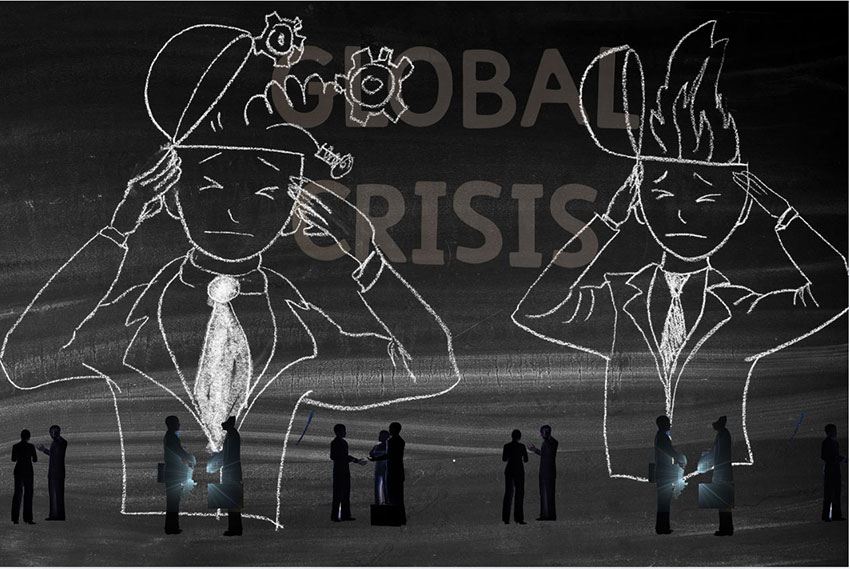
The world of work is entering a new phase full of pressure, uncertainty, and change that seems to never let up. Since the pandemic, the professional landscape has changed dramatically. Many companies have had to consolidate their targets, adapt to an unstable market, and rebuild their work culture in a short period of time. At the same time, workers face increasingly demanding realities: rising productivity demands, blurring boundaries between work and personal life, technology accelerating the pace of work, and seemingly higher organizational expectations. This combination has given rise to a phenomenon that many experts refer to as the global burnout crisis—a crisis of mental and emotional exhaustion that is affecting workers around the world.
Burnout today is not just a feeling of tiredness that arises after working hard. It has developed into a collective condition that attacks a person’s body, mind, and even professional identity. Burnout causes people to lose motivation, doubt their abilities, and lose meaning in their work. Many workers feel like they are living on autopilot: doing many things every day, but feeling like they are not really “living” in it. They are physically present, but mentally and emotionally drained.
This crisis is exacerbated by the modern workplace, which creates conditions that easily push people into burnout. The culture of “always being on,” the pressure to respond to messages immediately, the expectation that workers can handle multiple roles at once, and the demand for constant growth—all of these create tremendous pressure. It is no wonder that burnout is now referred to as a global epidemic, a problem that not only damages productivity but also the mental health of millions of people in various countries.
This phenomenon has a chain of consequences for organizations. When burnout is rampant in a company, the impact is felt everywhere. Performance declines, creativity drops, communication is disrupted, conflicts increase, and employee retention worsens. Companies have to spend a lot of money to replace employees who resign due to exhaustion, while innovation becomes increasingly difficult because teams don’t have the energy to think ahead. This problem is not just a matter of individual health, but of business sustainability.
Ironically, the group most vulnerable to burnout is not only junior employees, but leaders—especially middle managers. They are caught in the middle: acting as a bridge between the organization’s strategy at the top and the needs of employees at the bottom. They are expected to understand the company’s vision, translate it into action, ensure the team runs smoothly, manage conflicts, oversee performance, and serve as the backbone of daily operations. On the other hand, they also face personal pressures: maintaining work-life balance, building their careers, and remaining a reliable figure in their families.
Many leaders feel “lost” amid these demands. They want to lead well, but their mental energy is almost depleted. They want to be there for their team, but their minds are filled with reports, evaluations, KPIs, and various targets that continue to chase them. The more a leader pushes themselves without realizing their personal limits, the greater the risk of losing their sharpness of thought, losing empathy, and ultimately losing the ability to lead with quality.
Burnout erodes leadership quality. A tired leader is unable to deal with conflict calmly, unable to see the big picture, and easily gets caught up in reactive patterns. When fatigue builds up, leaders begin to avoid difficult conversations, delay decisions, or, conversely, become too impulsive. The signs of burnout in leaders are often invisible to others because many leaders choose to keep everything to themselves. They are afraid of appearing weak, afraid of being perceived as incompetent, when in fact they need help just like other team members.
Amidst this global burnout crisis, a new awareness has emerged that traditional leadership styles are no longer sufficient. Today’s leaders are required to adopt human-centered leadership—an approach that places people at the core of all organizational decisions and work patterns. Human-centered leadership is not about being a “soft” leader, but about being a wiser, more sensitive, and more strategic leader in understanding human dynamics. This approach combines empathy with clarity, gentleness with firmness, and attention with professionalism.
Human-centered leaders do not see their teams as machines that must operate non-stop. They see people in all their complexity: their need for rest, their need for recognition, their need for clarity, their need for growth, and their need for healthy human relationships. In organizations led with a human-centered style, burnout is not considered an individual weakness, but a signal that the system needs to be improved.
This is where awareness becomes important. Leaders need to recognize the signs of burnout, both in their team and in themselves. For example, when a member suddenly becomes quiet, their work quality declines, or they often feel insecure, this is not just a performance issue; it could be a sign that they are exhausted. Awareness also means that leaders are able to examine themselves honestly. Have they lost their enthusiasm? Do they find it difficult to do the work that used to excite them? Do they feel they have no room for a break?
After awareness, leaders need to build alignment—a harmony of goals between the organization, leaders, and team members. Burnout often occurs when someone works hard for goals they don’t understand or believe in. Leaders who are able to explain the direction, reasons, and impact of each task help the team find meaning in their work. This harmony makes workers feel more connected to their work and more emotionally stable.
In the next stage, leaders need to make adjustments to the work patterns so that the organization’s rhythm is more humane. This could be in the form of rearranging workloads, providing flexibility, clarifying priorities, or reducing unnecessary administrative burdens. Many leaders do not realize that the biggest stress for teams is not difficult work, but unclear work. Uncertainty is a source of energy that is drained without results.
Then there is the element of accountability—collective responsibility for maintaining a healthy work culture. It is not only leaders who must change, but the entire organizational system. A new culture can only thrive if everyone is involved in maintaining it. Accountability means that companies have consistent policies: they do not glorify overtime, they do not reward unhealthy work patterns, and they do not consider it normal for employees to sacrifice their quality of life for work.
Human-centered leadership not only saves individuals’ mental health, but also builds a stronger organizational foundation. Mentally healthy teams are more innovative, more loyal, and more adaptable to change. Emotionally present leaders are better able to create trust, which is at the core of all healthy working relationships.
Recovery from burnout is not a short journey. It requires a change in mindset, a change in behavior, and a change in culture. However, many organizations do not have a “roadmap” for building a healthy work environment. They want their teams to be strong, but forget to build the structures that support that strength. This is where mentoring, training, and coaching play an important role.
Ultimately, the global burnout crisis is a call for leaders to change. Not to become leaders who are capable of everything or know everything, but to become leaders who are willing to see people through clearer eyes. Leaders who understand that people don’t just work with their hands and brains, but also with their hearts and emotional energy. Leaders who dare to create space for mental health, not just space for productivity.
Qando Coaching is committed to being a partner for companies, leaders, and organizations in building more humane leadership. Through leadership programs, mental fitness, and human-centered approach coaching, Qando helps leaders understand the dynamics of burnout, develop healthy work patterns, and build an organizational culture that can withstand increasing global pressures. To learn more about the training and coaching programs that can support this transformation, visit campsite.bio/qqgroup and follow Qando Coaching’s social media to stay updated on the latest developments.
Mari bersama melangkah menuju Indonesia hebat!

