
A young supervisor once said during a training session,
“I meet my work targets, but I feel extremely tired… not physically tired, but mentally exhausted.”
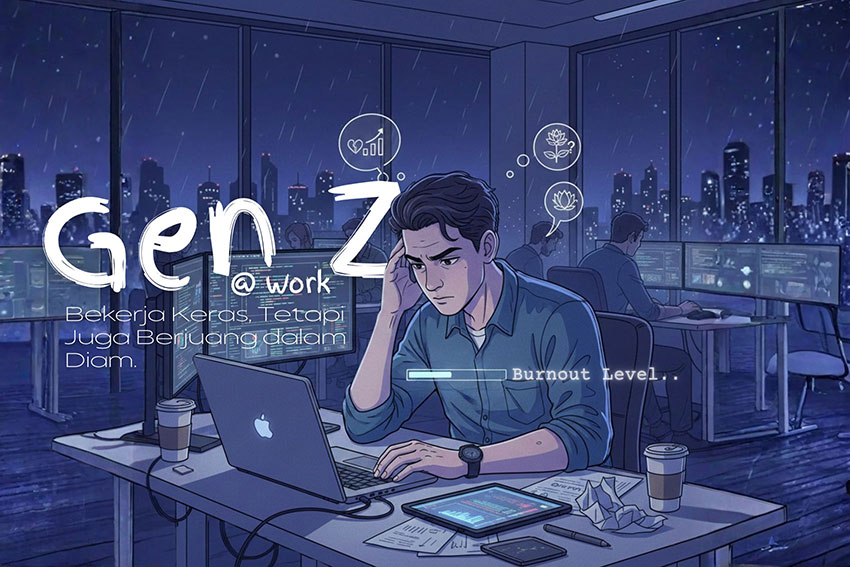
Stories like this are being heard more and more often. Many young professionals, especially from Generation Z, enter the workplace with enthusiasm, creativity, and a strong desire to learn. Yet behind this energy, many of them are facing mental pressures that are not always visible.
Recent reports indicate that this condition is not merely a perception. A global Deloitte survey found that around 40% of Gen Z feel stressed or anxious most of the time, and work is one of the main contributing factors.
In Indonesia, reports in national media such as SindoNews also show that chronic work fatigue (burnout) is increasingly experienced by young workers, particularly those who are newly entering the professional world.
This phenomenon is not happening because this generation is weaker. On the contrary, they are living in an era that moves extremely fast, filled with expectations, and often leaves little room to pause.
Pressures That Are Not Always Visible
Several factors commonly become sources of pressure for young professionals in the workplace:
They want to grow quickly, but career realities require time and process.
They want to contribute meaningfully, but often face demanding targets and rapid changes.
They are constantly digitally connected, making the boundary between work and personal life increasingly blurred.
As a result, many still appear productive on the outside, while mentally they are beginning to feel exhausted.
And when mental fatigue occurs, the impact is not only on the individual—it also affects team dynamics, communication, creativity, and even organizational performance.
Mental Health Is More Than Just Rest
Maintaining mental health is not only about taking leave or going on vacation.
More importantly, it is about building healthy habits and ways of thinking at work.
Some simple steps that have proven helpful include:
Setting clear work boundaries, including time to truly rest.
Learning to prioritize tasks instead of trying to complete everything at once.
Doing brief, regular reflections to recognize one’s emotional and energy levels.
Building open communication with supervisors, mentors, or colleagues.
These small actions often become the foundation of strong mental health.
The Role of Learning in Maintaining Mental Health
One important point that is often overlooked is that mental health can also be learned and developed.
Understanding how stress works, recognizing early signs of burnout, and practicing healthy mental habits are skills that can be developed—not merely natural traits.
In response to this need, Qando Qoaching has developed a digital learning module that helps participants understand and practice mental health in the modern workplace: cando-learning
Through a microlearning approach that is concise, practical, and applicable, participants can learn to:
- recognize early signs of stress and burnout
- build healthier work habits
- maintain a balance between productivity and personal well-being
This approach is becoming increasingly relevant, especially for Generation Z, who are accustomed to learning digitally and flexibly.
Being Productive Without Losing Yourself
Generation Z brings new energy into the workplace—fresh ideas, the courage to try new things, and a collaborative spirit.
Our shared challenge—as individuals, leaders, and organizations—is to ensure that this spirit is not drained by unmanaged pressure.
Because in the end, strong organizations are not built only by people who work hard, but by people who work with a healthy mind, a calm heart, and a clear sense of purpose.

